1 - Le clocher portail
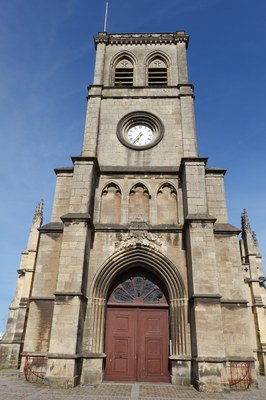
L'entrée de la basilique se fait par un imposant clocher-portail construit entre 1825 et 1828 par l'architecte Le Sauvage, le précédent porche ayant été rasé en 1822. En effet, la construction de celui-ci avait été commencée dans le style gothique flamboyant du premier XVIe siècle, mais les problèmes financiers du royaume en 1532, puis la peste de 1625, avaient interrompu les travaux. Ce porche n'a donc jamais été terminé.
Du haut de ses 26 mètres, le nouveau clocher-portail est le résultat d'un ensemble de compromis architecturaux : il est l'un des tout premiers vestiges en France de l'art néo-gothique mais sa forme carrée et lourde semble appartenir à une architecture classique des plus sévères. Sa grâce a été bannie au profit de l'aspect fonctionnel de son beffroi, créant ainsi un élément architectural qui tranche fortement avec le reste de l'édifice et donne à l'église sa physionomie singulière.
The entrance to the basilica is through an imposing bell tower-gate built between 1825 and 1828 by the architect Le Sauvage. The previous porch had been razed in 1822. Construction of the former had begun in the Flamboyant Gothic style of the early 16th century, but the kingdom's financial problems in 1532, followed by the plague of 1625, interrupted the work. This porch was therefore never completed.
At 26 meters tall, the new bell tower-gate is the result of a series of architectural compromises : it is one of the earliest vestiges of Neo-Gothic art in France, but its heavy, square shape seems to belong to the most severe classical architecture. Its grace was banished in favor of the functional aspect of its belfry, thus creating an architectural element that contrasts sharply with the rest of the building and gives the church its unique appearance.